

Your septic system is one of the most important, and expensive, components of your home. Many homeowners try to disguise the unsightly “candy cane” pipe sticking out in their yard with plants, which may seem like the obvious choice. Unfortunately, root systems from trees, shrubs, and ornamental plants are very destructive to your septic system and can lead to costly repairs. The good news is that there’s a smarter way to beautify your septic vent that avoids these risks entirely.
Why Roots Are Drawn to Septic Systems
Roots are constantly seeking out moisture and nutrients in the soil. Your septic system is rich with both, making it one of the most attractive targets in your entire yard. Once roots find your system, the damage they cause is slow and often invisible until it becomes a serious problem. Even small cracks, loose joints, or minor imperfections in your pipes release just enough moisture into the surrounding soil to attract nearby roots from a surprising distance.
The Step-by-Step Damage Roots Cause to Your Septic System
Root intrusion is one of the many causes of septic system failure, and it doesn’t happen overnight. By the time symptoms appear above ground, the damage below can already be extensive.
Stage 1: Root Infiltration
Roots enter septic pipes through the smallest imperfections, whether they’re hairline cracks, loose pipe joints, or aging seals. Older systems with clay or concrete pipes are especially vulnerable. Once a root tip finds an opening, it enters and begins to grow inside the pipe.
Stage 2: Blockage and Buildup
Inside the pipe, roots branch and thicken into dense masses that act like a net. Debris will catch onto them and accumulate rapidly, resulting in a complete blockage that slows drainage, causes backups, and puts strain on the entire system.
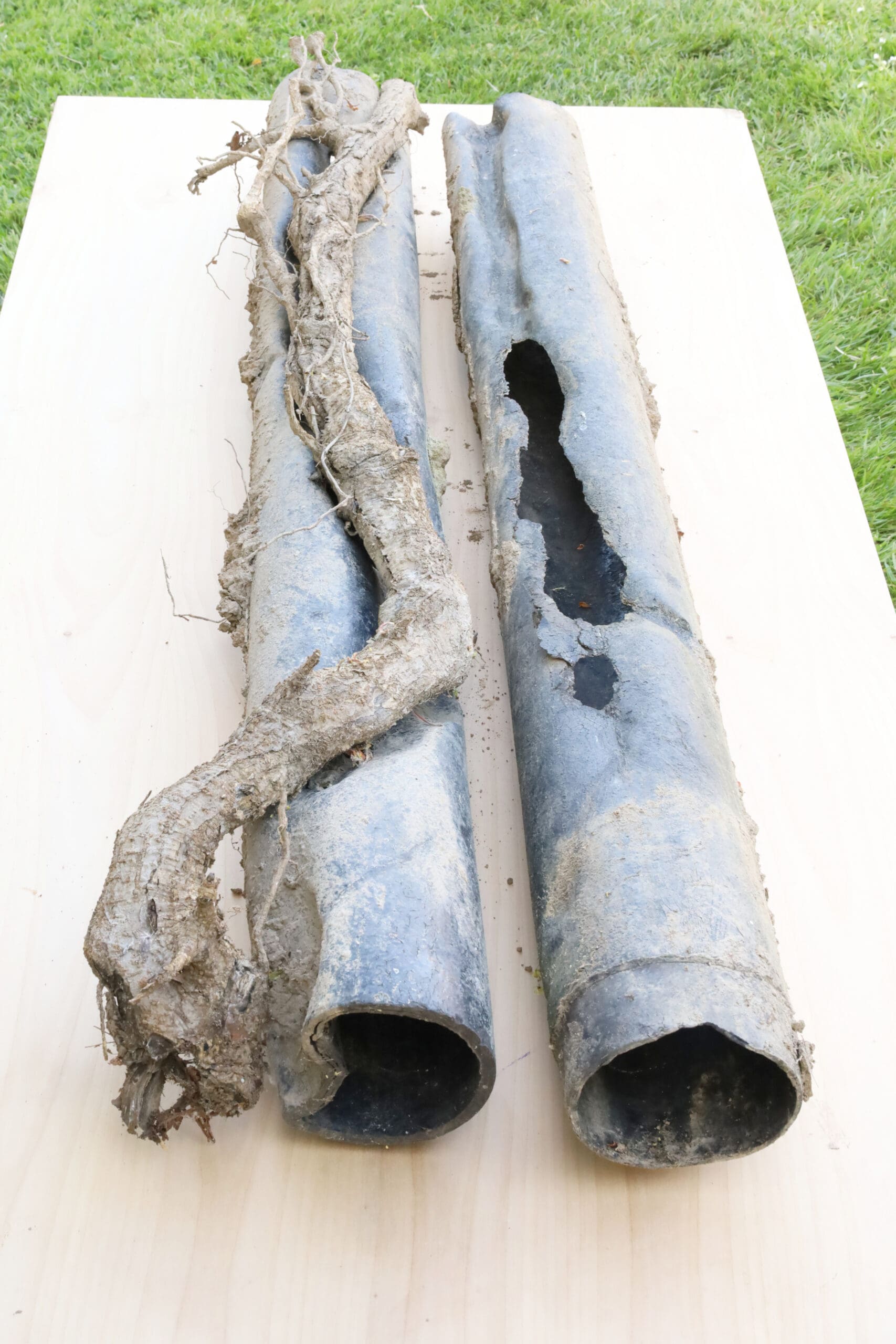
Stage 3: Pipe Fracture and Collapse
As roots continue to grow, the pressure on the pipe walls increases. This will actively widen the cracks they may have entered through, leading to fractures that allow soil and groundwater into the system. In severe cases, pipes can collapse entirely, requiring full excavation and replacement.
Stage 4: Tank Damage
Roots that reach the septic tank itself can crack tank walls, compromise inlet and outlet baffles, and damage the tank’s structural integrity. A cracked tank would leach hazards into the surrounding soil, creating a system failure and potential environmental and health hazard on your property.
Stage 5: Drain Field Failure
The drain field is the most vulnerable and expensive component to address. Roots disrupt the carefully balanced soil structure the drain field depends on to process wastewater. They compact the soil, destroy beneficial bacteria, and physically clog the distribution network. Drain field repairs or replacement can run into the thousands to tens of thousands of dollars depending on the size of the system, local soil conditions, and your region.
Plants That Are the Biggest Risk to Your Septic System
Not all plants are equally dangerous to septic systems, but the EPA advises homeowners not to plant trees, shrubs, or vegetable gardens over or near your septic system.
The highest-risk plants are trees with aggressive, wide-spreading root systems. Many professionals recommend keeping trees at least 30 feet from any septic component, though the right distance depends on the species and your specific system. Medium-risk plants, on the other hand, include large ornamental shrubs and hedges. While they are less aggressive than trees, their roots can still cause damage over time.
Commonly overlooked risks include ornamental grasses, perennials with deep taproots, and ivy or other ground covers that are planted directly around septic vent pipes and tank lids to make them less visible. These plants may seem harmless, but their roots create access problems, introduce moisture around above-ground components, and block vent openings over time. The most appropriate plants, according to the EPA, are native grasses.
Plants Block Access to Septic Systems
Even if roots never cause structural damage, plants around your septic vent pipe or tank lid create a practical problem every time your system needs service. Septic professionals need routine access to vents, lids, and risers for inspections, filter changes, and pumping. When that area is surrounded by a garden bed, shrubs, or ornamental grasses, technicians have to work around the obstruction or ask you to remove the plants first.

BellaVent, The Better Way to Beautify Your Septic Vent
Rather than hiding a septic vent pipe with plants that introduce risk, replace it with something purpose-built. BellaVent’s decorative vent covers are handcrafted from durable, weather-resistant composite fiberglass that won’t rust, rot, crack, or fade, and engineered to maintain full ventilation while transforming your septic vent pipe into an attractive yard feature. No plants, no root systems, no ongoing maintenance, and no digging up garden beds when the technician arrives. It’s a one-time investment that looks great from day one, protects your septic vent pipe from damage and lawn equipment, and eliminates every risk associated with planting near your septic system.
Contact us today to explore BellaVent’s full line of decorative septic vent covers and find the right fit for your home.